
There is a pattern running through the most significant SEO developments of the past few weeks, and it is worth naming clearly rather than treating each story in isolation.
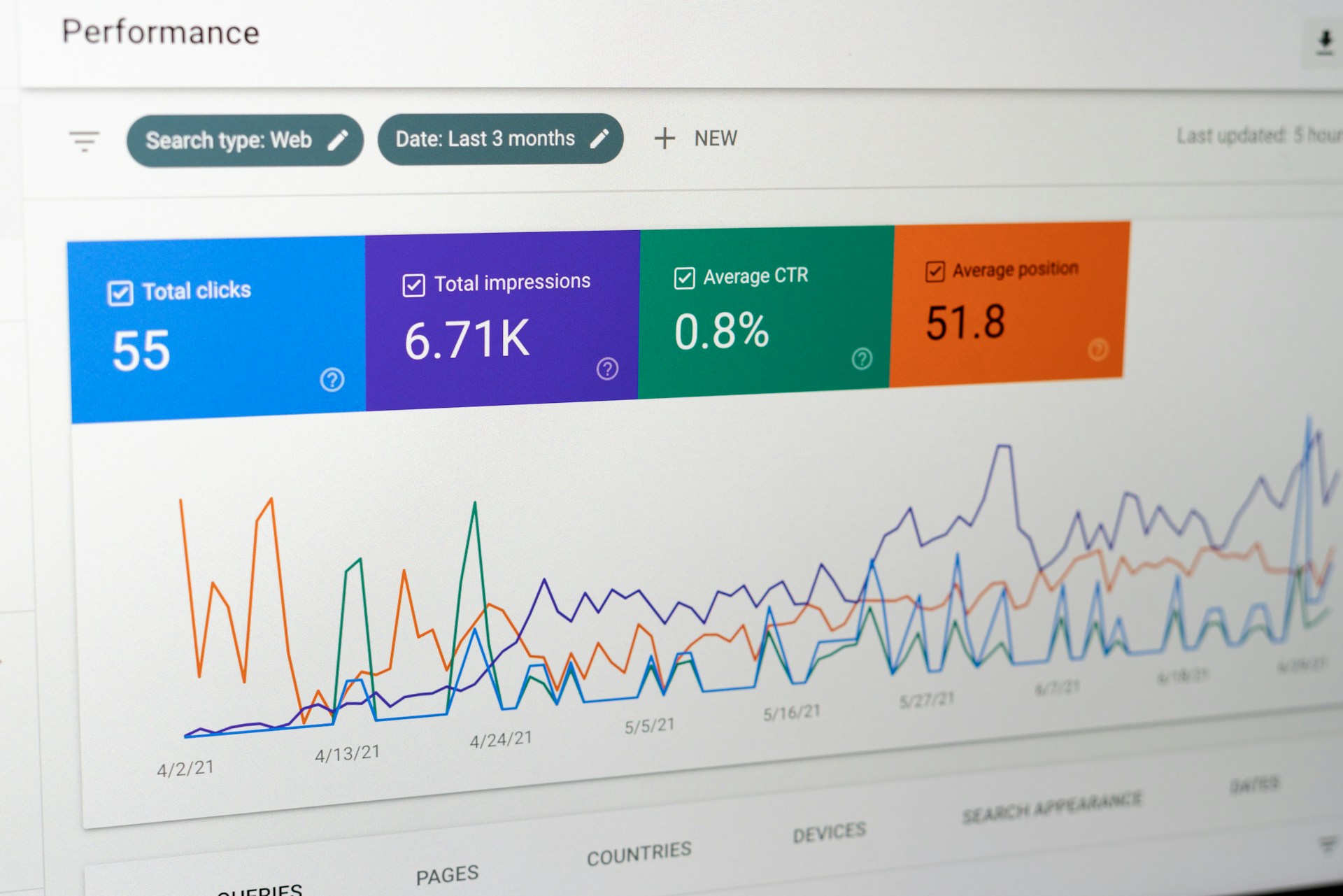
Google Search Console now shows impressions from AI Overviews, AI Mode, and AI-powered Discover features in a dedicated Generative AI report. Google is rolling out publisher profile pages in Discover. MIT researchers have mapped exactly which marketing tasks AI can already handle. Rand Fishkin has published a piece he describes as feeling necessary. And GSC data across the industry continues to show the same uncomfortable split: impressions climbing, clicks falling.
These are five readings of the same underlying shift.
The metric gap is telling you something urgently
When impressions rise and traffic falls, the instinct is to treat it as a technical problem. A SERP layout change. An AI Overview pushing the organic result down. A new featured snippet absorbing the click.
All of those things are real and worth diagnosing. But the deeper signal is structural: your content is being seen, summarised, and served without requiring the user to visit your site. Google’s AI layer has become a distribution mechanism that uses your work as raw material and returns a portion of the value, but keeps the visit.
The new GSC Generative AI report makes this visible for the first time with first-party data. You can now see which of your pages are being used to ground AI responses. Cross-reference those pages with your standard performance data and the picture sharpens: a page with high AI impressions and high organic clicks is demonstrating something that AI cannot fully replace. That is your clearest signal of what non-commodity content actually looks like on your site.
The inimitable content question
MIT’s AI Labor Exposure Map puts a number on the problem. Around 65% of what a marketing specialist does day-to-day is now within reach of current AI systems. Market research, competitor analysis, campaign planning, standard content production. The tasks that defined content marketing as a discipline are precisely the ones most exposed to automation.
Rand Fishkin’s response to this is the most honest framing I have seen: stop asking how to make great content, and start asking what you make that AI cannot replicate. His examples are physical, which makes them vivid rather than directly applicable. But the principle holds for digital work too.
Original research that required access you have and AI does not. Analysis rooted in pattern recognition built over years of working inside a specific industry. Opinions formed through direct experience rather than synthesised from existing web text. Curation that reflects genuine editorial judgment rather than consensus aggregation.
The question worth sitting with is what the remaining 35% is, and whether you have been investing enough in it.
Brand authority is the new rankings
The evidence is converging on a single practical priority: brand.
When an LLM recommends your site, most users skip the citation and open a new tab to search your brand name directly. This means branded search volume is becoming a meaningful proxy for AI visibility, and it is a metric that SEO teams have historically treated as the domain of PR and comms rather than search.
Google’s new publisher profile pages in Discover push in the same direction. Qualifying publishers, those with substantial followings on YouTube, Instagram, TikTok, or X, can now claim a centralised landing page that showcases their articles, videos, and social posts, with the additional benefit of triggering or enhancing a Knowledge Panel. Google is building infrastructure for recognised publishers and creators to stand out from anonymous content. That is an E-E-A-T signal at platform level, not just page level.
The threshold requirements are high (100,000 followers on YouTube or Instagram, 300,000 on TikTok), but the direction of travel matters regardless of whether you qualify today. Google is building a two-tier discovery environment: known entities with followings and verified presence on one side, undifferentiated content on the other. The strategic question is which tier your brand is working toward.

Here’s what is actually worth measuring now
The traffic metrics that made SEO reporting legible in 2018 are producing noise in 2026. Top-of-funnel informational traffic is the category most directly targeted by AI answers, and measuring it as a primary success indicator is measuring precisely the thing that is being eroded.
A more useful reporting framework focuses on four page types where organic visits still carry genuine intent: the homepage (where branded search from AI recommendations lands), pricing pages (where buyers who are ready to transact go to verify), product and solutions pages (where purchasing decisions are confirmed), and high-value conversion pages such as original research landing pages or demo requests.
Beyond page-level traffic, the metrics worth tracking now include branded search volume as an AI visibility proxy, self-reported attribution on conversion forms (with AI Search listed as an explicit option), referral sessions from LLMs, and presence in the third-party listicles and review sources that AI models draw on when constructing recommendations.
This is a harder story to tell to stakeholders than a traffic chart, but it is an accurate one.
And here’s why this all matters
SEO still matters, and so does content. The version of SEO built around producing high volumes of informational content and measuring the resulting traffic is reaching its natural limit.
The practitioners who navigate this well are the ones doing three things. They are auditing their own exposure honestly, identifying which of their current tasks are AI-replicable and which are not. They are investing in the 35% that AI cannot easily replicate: original research, genuine expertise, direct access to sources and communities, editorial judgment that comes from experience. And they are building brand authority that survives a zero-click environment, because in a world where Google summarises your content rather than sending traffic to it, being a known and trusted source is the distribution advantage that remains.
The GSC Generative AI report is a useful new tool. The publisher profiles in Discover are worth claiming if you qualify. But both are instruments for measuring and improving something more fundamental: whether your brand has enough genuine authority that people seek it out directly, even when Google gives them the answer without asking them to click.
That has always been the goal. The current environment just makes it harder to pretend that something less demanding is sufficient.
If you’re rethinking how your team talks about SEO and organic visibility, I help in-house teams and founders build strategies that work across traditional and AI search. Get in touch below.

