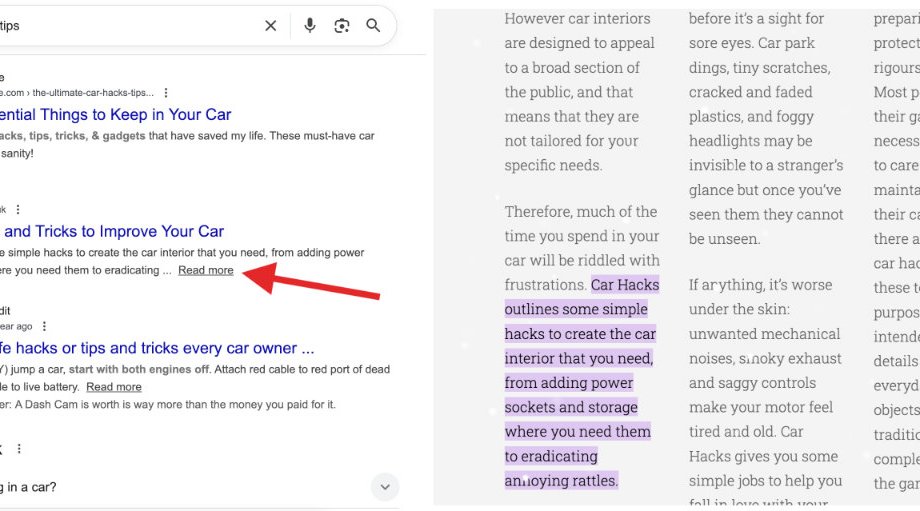
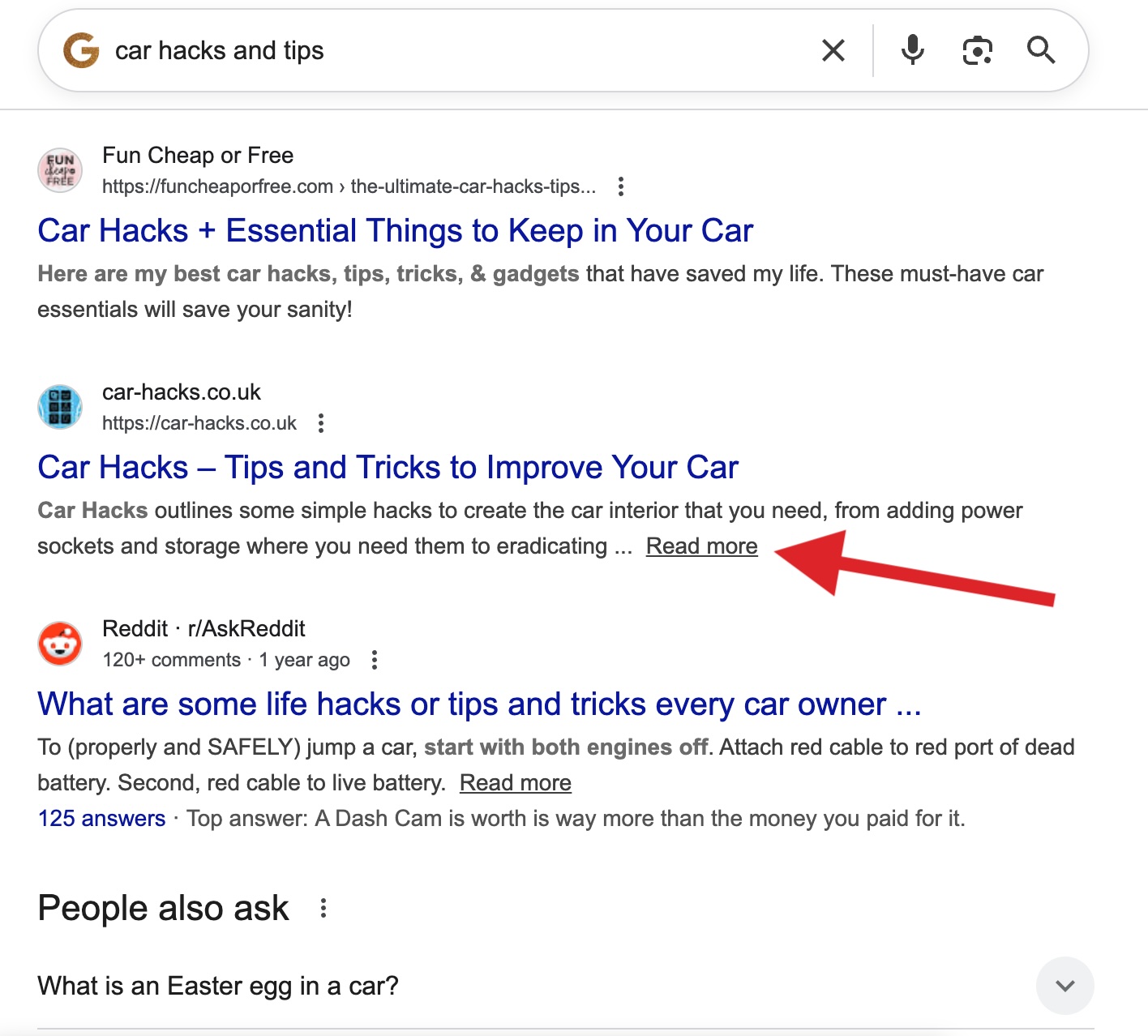
Google has been quietly expanding a ‘Read more…‘ interaction in search results, where clicking the link reveals a longer excerpt of text directly in the SERP.
On the surface, this looks like a small UI tweak. In practice, it’s surprisingly revealing, because it shows you exactly which section of your page Google is pulling the snippet from.
That matters more than it might sound.
What the ‘Read more…’ feature does

When the feature appears, clicking ‘Read more…‘ expands the snippet and highlights the specific passage Google has selected from the page.
In other words, Google isn’t just telling you which page it prefers, it’s showing you which paragraph it believes best answers the query.
That gives site owners something we don’t often get from SERPs: direct visibility into Google’s content extraction logic.
Why this is useful (beyond curiosity)
Seeing the exact snippet source helps answer a few important questions:
- Which wording does Google trust to answer the query?
- How is it interpreting search intent for this term?
- What part of the page is doing the real ranking work?
This is especially useful on longer pages, where the selected passage may not be your introduction, a heading, or the copy you’d naturally point users towards.In many cases, it’s a paragraph you might not have paid much attention to at all.
Practical ways to use this insight
01. Refine the right section of the page
Instead of broadly optimising the page, you can focus on the paragraph Google is already using. That usually means:
- clarifying language
- tightening definitions
- removing ambiguity
- improving flow and readability
Don’t, however, start stuffing keywords into this paragraph. Small changes instead can have an outsized impact.
02. Monitor when Google switches snippets

Over time, Google may start pulling a different paragraph from the same page, sometimes even when rankings stay stable. That switch can signal:
- a shift in how Google understands the query
- changes in competing content
- or improved clarity elsewhere on the page
Watching snippet changes can be just as informative as watching ranking changes.
03. Understand when visibility won’t equal clicks
In some cases, the expanded snippet answers the query so well that users simply don’t need to click through. That can feel uncomfortable if you’re used to judging success purely on CTR, but it isn’t always a problem. For informational or early-stage queries, success may look like strong visibility, clear brand association, or being consistently selected as the answer. Rather than traffic, the win is representation.
What this says about modern SEO
This feature reinforces a broader shift that’s been underway for a while: Google is increasingly selecting passages, not pages. That has a few implications:
- Page-level optimisation still matters, but it’s no longer the whole story
- Headings, metadata and structure help, but Google often pulls copy from unexpected places
- The words that actually answer the question may matter more than the words you’d choose for messaging or persuasion
The gap between what we want to say and what Google chooses to surface is widening. Seeing that gap clearly is useful.
Is SEO dead, part 147…
The ‘Read more…’ feature doesn’t mean traditional SEO is obsolete. But it does reward clarity, relevance, and genuinely useful copy. If Google is going to decide which paragraph speaks for your brand in search results, it’s worth knowing which one that is, and why.



 Craig Stewart